Many pilgrims ask whether the Ruta Xacobea por el mar de Arousa, the Ruta Xacobea do Mar de Arousa e Ulla, the Ruta Jacobea Marítimo Fluvial and the Camino del Mar de Arousa y Ulla are the same as the Ruta Traslatio, or whether they pass through the same places. We wrote this article to clear this up.
All these names are different ways of referring to the route that, according to tradition, was followed by the boat carrying the remains of the Apostle St James (1st century). What sets this route apart from the other Ways of St James is that it can be travelled by sea and river rather than on land.
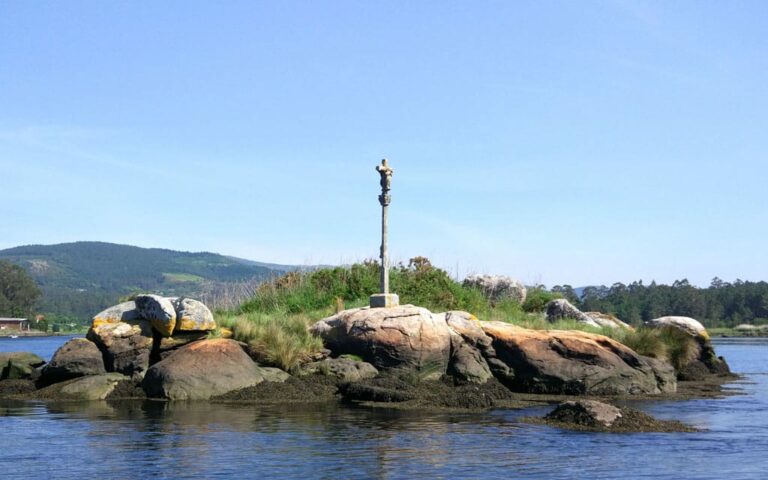
The route is done by sailing across the Ría de Arousa and up the River Ulla from its mouth at the head of the estuary, from the port of Vilaxoán (Vilagarcía de Arousa, Pontevedra) to Pontecesures (Pontevedra), where it joins the final stretch of the Portuguese Way (Pontecesures to Santiago de Compostela) through what is known as the “Spiritual Variant”.
Why Traslatio

Traslatio, or translatio, is the Latin term for the legendary voyage by sea of the body of the Apostle St James the Great from Palestine to Galicia, where he was buried, which gives meaning to the discovery of his tomb and remains in what is now Compostela (c. 820 to 830).
The yearly commemoration of the Traslatio across the Ría de Arousa, organised by the Ruta del Mar de Arousa and the Fundación Río Ulla, takes place in late July or early August and is sponsored by Xacobeo (Xunta de Galicia, the regional government), the naval authorities, the parish of Santiago de Padrón and local boat owners and fishermen.
The Ruta Traslatio is one of the main Way of St James routes in Arousa, and was presented internationally at Fitur (the International Tourism Fair) as a new destination for everyone who wants to do the Spiritual Variant of the Way.